
See also


 10.03.2026 12:00 PM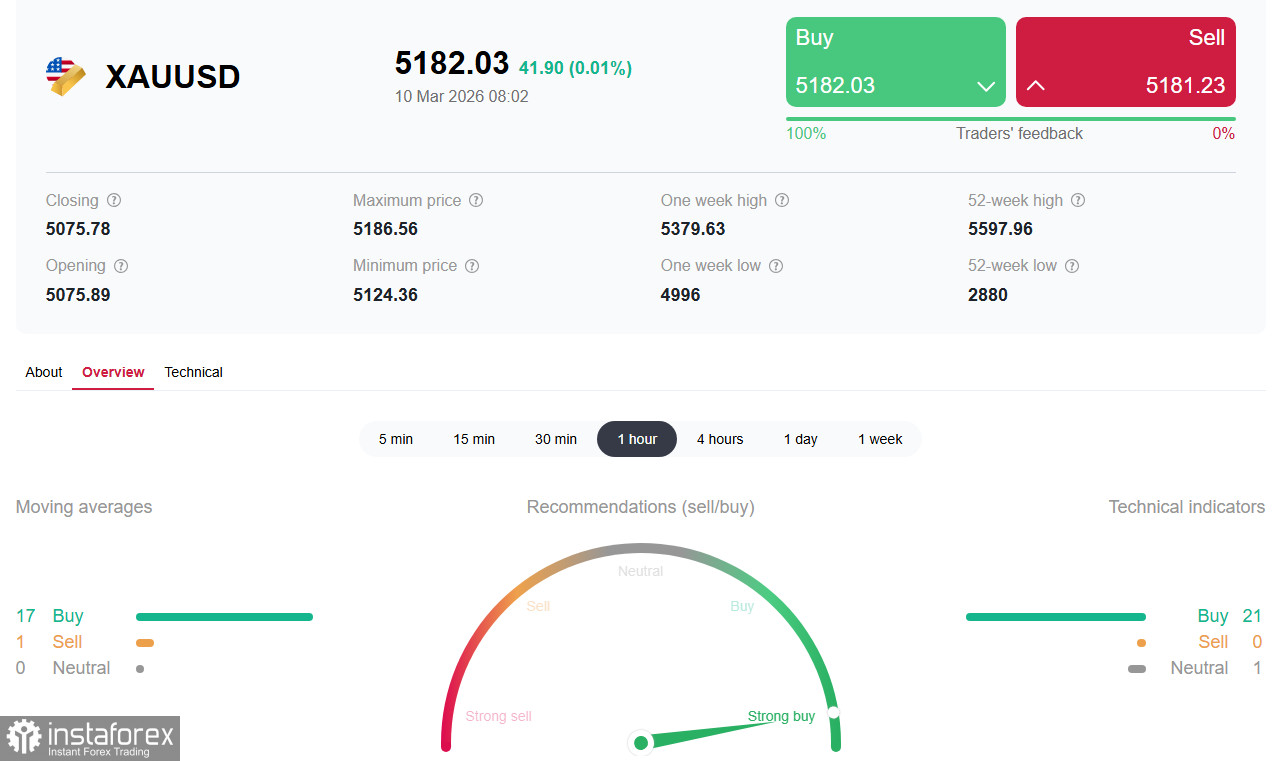
Gold is experiencing a rare paradox: geopolitical chaos and safe-haven demand clash with pressure from rising real yields and a stronger dollar. The key zone of $5,015.00–5,200.00 will be decisive in the coming days.
XAU/USD finishes the first ten days of March in a state of high uncertainty, trading in the early European session on Tuesday around $5,170.00–$5,180.00 after bouncing off the psychological $5,000.00 level, which corresponded to the month's lows.
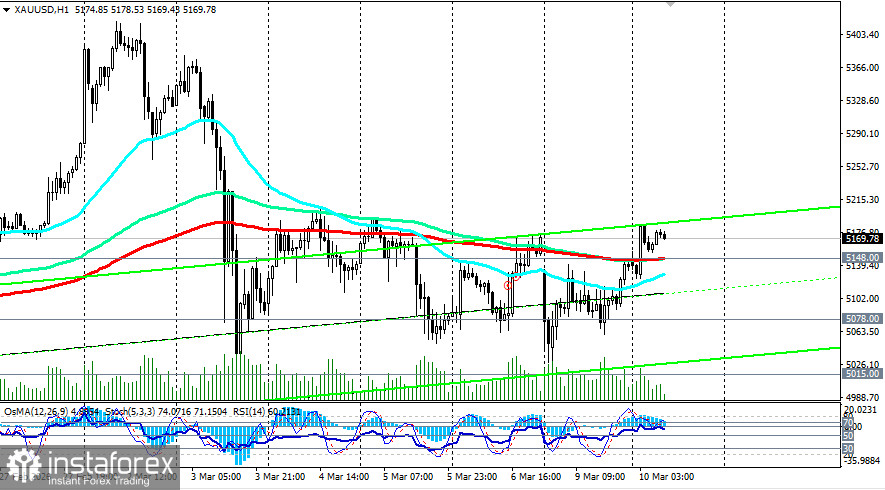
The yellow metal finds itself at the epicentre of a sharp tug-of-war: on one side — escalation of the Middle East conflict and rising demand for safe assets; on the other — a stronger dollar and revised Fed rate expectations in the face of inflationary fears.
Current situation: geopolitics vs monetary policy
Iran factor: a war without signs of ending
Geopolitical tension in the Middle East remains the key driver for gold. Iranian officials have dismissed US President Donald Trump's statements about a quick end to the conflict as "nonsense," warning that regional security will exist either for everyone or for no one. The Islamic Revolutionary Guard Corps (IRGC) said Tehran — not Washington — will determine when the war ends.
After the assassination of Supreme Leader Ali Khamenei, his son Mojtaba Khamenei was appointed the new leader, signalling continuity of the hardline stance and making a swift end to the conflict unlikely. Iran has warned it could block oil exports from the region if US and Israeli attacks continue.
Oil shock and inflation expectations
Oil prices regained upward momentum after a dramatic reversal from June 2022 highs amid fears of supply disruption following the closure of the Strait of Hormuz. Investors remain worried that sustained energy price increases will drive higher inflation.
According to CME Group, markets are now pricing in only about 37 basis points of rate cuts in 2026 — substantially less than the roughly 66 basis points priced in before the spike. This supports elevated US Treasury yields and a stronger dollar, limiting gold's upside potential.
Dollar factor and Fed outlook
The US dollar index (USDX) has been trading around 98.70–98.60 amid uncertainty and persistent geopolitical risk. CME FedWatch shows markets putting roughly a 97% probability on no change to rates at the March meeting.
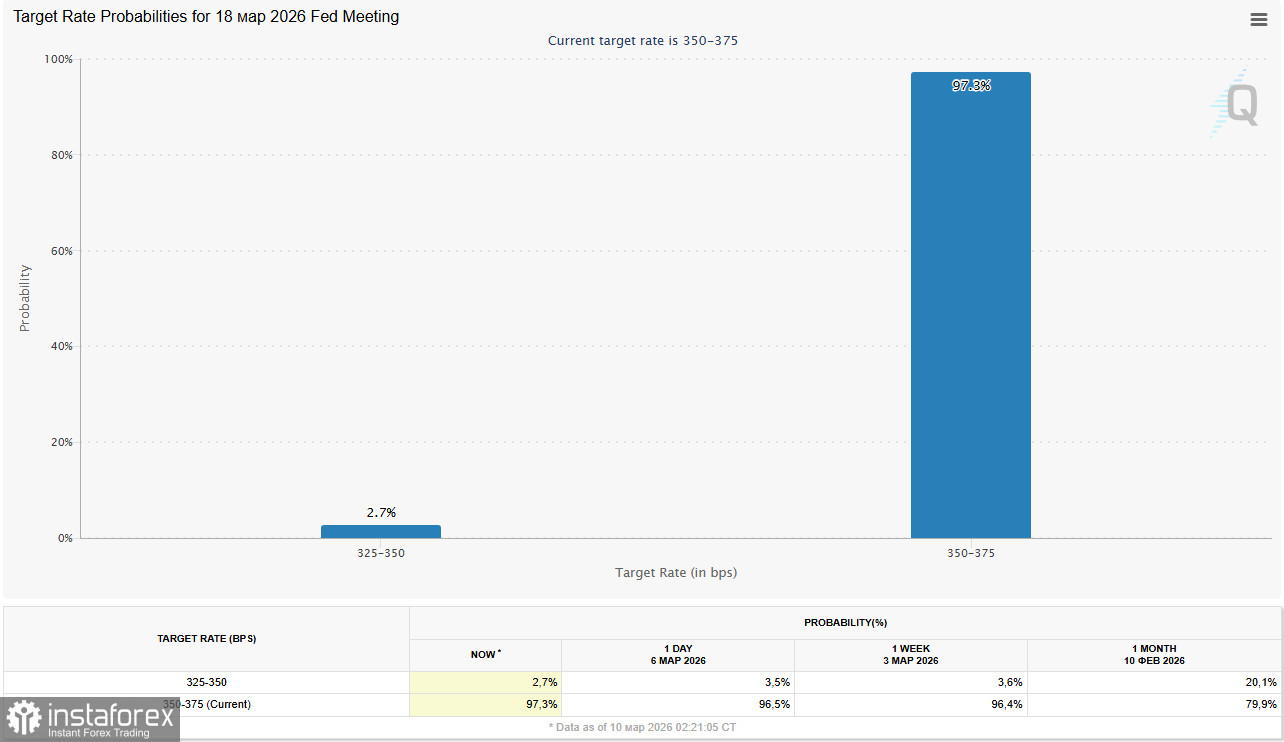
Minneapolis Fed President Neel Kashkari said it is too early to know how the war with Iran will affect inflation, but acknowledged it could influence monetary policy. Economists note that expectations for Fed easing were sharply reduced after the conflict began.
Expert views
Long-term view
The structural bull market remains intact. The global geopolitical risk index is at historic highs, and the risk premium for gold will persist. Central bank demand remains resilient — about 950 tonnes are expected in 2026.
Conclusion
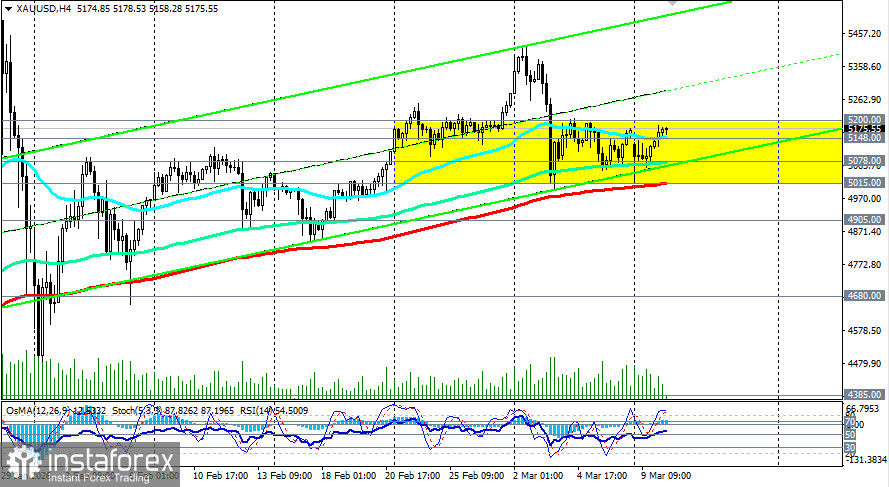
Gold faces a rare paradox: geopolitical chaos and safe?haven demand confront pressure from rising real yields and a stronger dollar. The key zone $5,015.00–$5,200.00 will be decisive in the coming days — holding above $5,148.00 would allow bulls to target a retest of $5,230.00 and higher, while a break below $5,015.00–$5,000.00 would open the way to a deeper correction into the $4,905.00–$4,850.00 area.
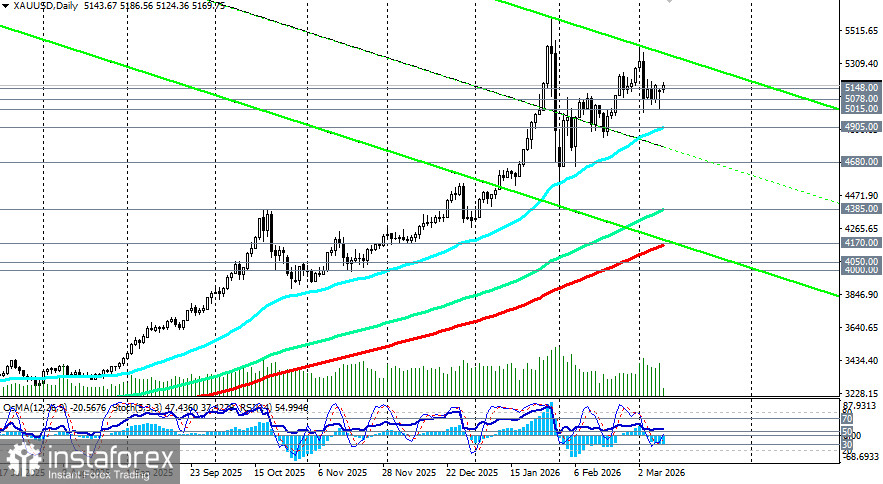
Volatility will remain high in any scenario. Investors should closely monitor diplomatic developments (any signs of de-escalation could quickly remove the geopolitical premium), US inflation data (CPI on Wednesday and PCE on Friday) and Fed commentary on inflation risks. Success will favour those who can separate short-term noise from long-term trends — structural factors still point to potential upside to $5,700.00–$6,200.00 in the second half of the year.


