
यह भी देखें


 05.03.2026 07:56 AM
The US dollar retreated slightly, giving the euro, pound, and other risk assets a chance for a minor correction. However, under current conditions, this is merely a temporary respite.
Yesterday's strong ADP report on the increase in employment in the US private sector did not provide significant support for the US dollar, but that does not change the fact that the labor market is recovering, distancing the Federal Reserve from further interest rate cuts. It should be noted that while the ADP figures are an important leading indicator, they do not always accurately predict the non-farm payroll data published later, which has much greater weight in the markets. Therefore, traders and analysts likely refrained from making sharp moves yesterday, opting to wait for a more complete picture.
As for today's reports, figures for retail sales in the Eurozone for January are expected in the first half of the day. This data plays a crucial role in assessing consumer activity and the overall state of the economy in the region. Strong figures may indicate a recovery in demand and further growth, while weak ones may highlight ongoing issues and potential risks. Concurrently, special attention will be given to the speech of the President of the Bundesbank, Joachim Nagel. His comments regarding the current economic situation in Germany and the Eurozone, as well as potential future steps by the European Central Bank, may have a significant impact on the markets.
Finally, the publication of the ECB report from the monetary policy meeting will be another important event of the day. The document typically contains a detailed analysis of economic conditions, risk assessments, and the rationale for the decisions made. Analyzing this report will provide deeper insights into the central bank's position and intentions, though it is unlikely to have a significant impact on the euro's dynamics.
Regarding the pound, one of the key events in the first half of the day will be the release of the UK construction PMI data. This indicator, reflecting activity in one of the leading sectors of the economy, is particularly important for assessing the overall state of affairs and can significantly influence the national currency's exchange rate. Should the published figures fall short of expectations, it would undoubtedly quickly put pressure on the GBP/USD pair.
If the data aligns with economists' expectations, the Mean Reversion strategy might be the best approach. If the data is significantly higher or lower than economists' forecasts, the Momentum strategy would be preferable.
Long positions on a breakout of 1.1625 may lead to an increase in the euro towards 1.1660 and 1.1700;
Short positions on a breakout of 1.1600 may lead to a decline in the euro towards 1.1575 and 1.1535;
Longs on a breakout of 1.3345 may lead to a rise in the pound towards 1.3383 and 1.3421;
Shorts on a breakout of 1.3310 may lead to a drop in the pound towards 1.3275 and 1.3255;
Longs on a breakout of 157.40 may lead to a rise in the dollar towards 157.65 and 158.08;
Shorts on a breakout of 157.00 may lead to a dollar sell-off towards 156.75 and 156.33;
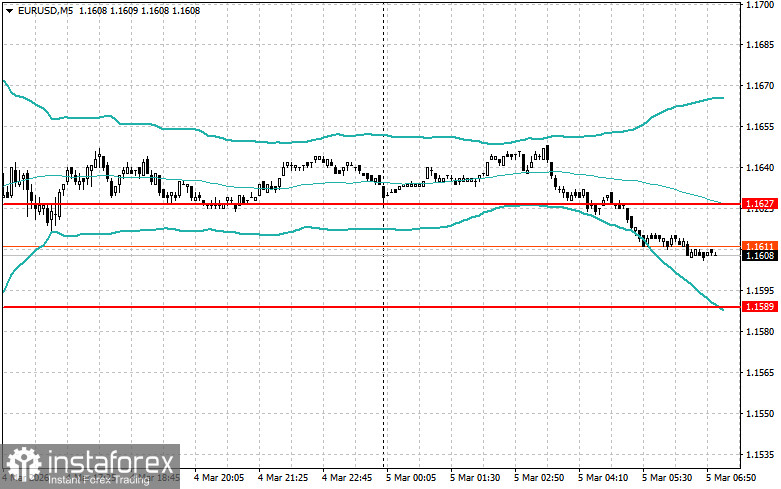
I will look for shorts after a failed breakout above 1.1627, targeting a return below this level;
I will look for longs after a failed breakout above 1.1589, targeting a return to this level;
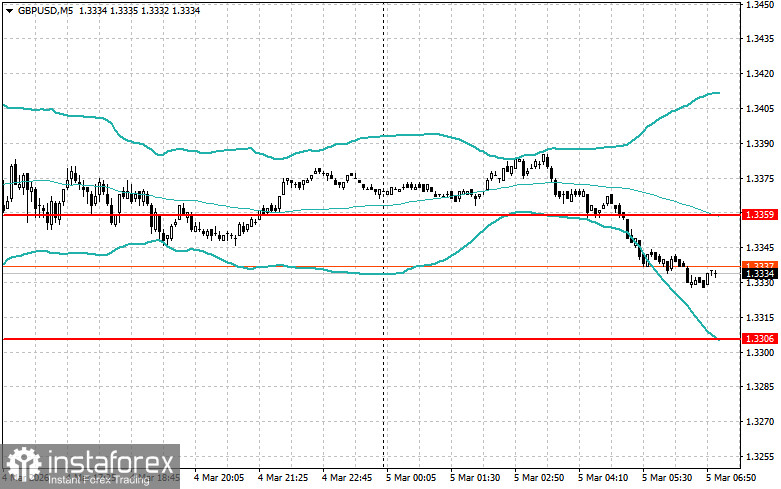
I will look for shorts after a failed breakout above 1.3359, targeting a return below this level;
I will look for longs after a failed breakout above 1.3306, targeting a return to this level;
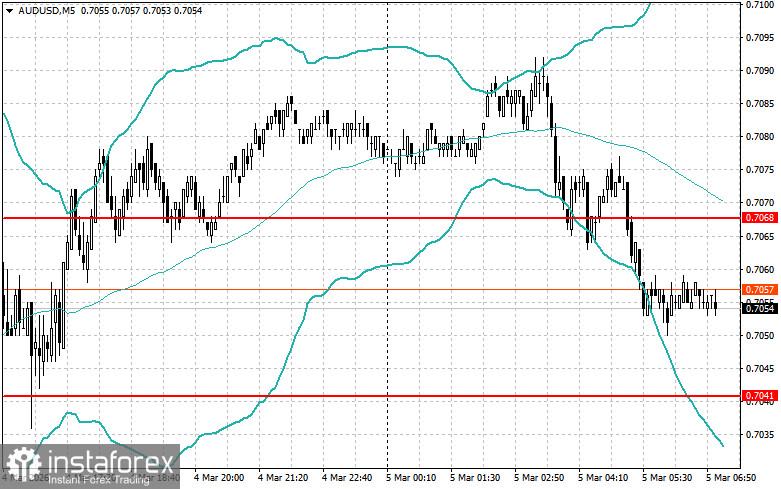
I will look for shorts after a failed breakout above 0.7068, targeting a return below this level;
I will look for longs after a failed breakout above 0.7041, targeting a return to this level;
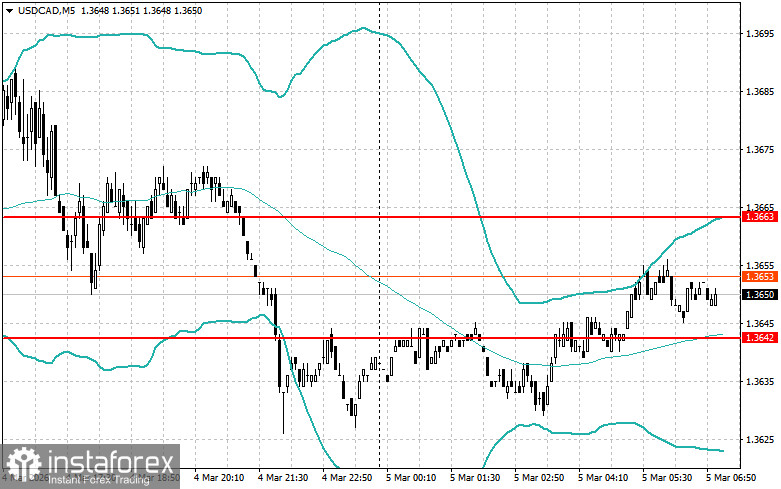
I will look for shorts after a failed breakout above 1.3663, targeting a return below this level;
I will look for longs after a failed breakout above 1.3642, targeting a return to this level;

