
यह भी देखें


 06.07.2026 10:33 AM
Bitcoin and Ethereum are still trading near their one-year lows. Over the past few days, the two major cryptocurrencies have managed a small correction, but there are still no signs of an end to the downtrend that began last year. There is only a liquidity sweep on the 4-hour timeframe for Bitcoin, which allows for a small correction — the one we are currently seeing. The fundamental backdrop remains sour for the crypto market, mainly reflected in low spot demand, capital flows into the AI sector, and the Fed's commitment to bringing inflation to 2%, which implies, at least, the continuation of tight monetary policy. Thus, we still see no basis for a sustained rally in the first and second cryptocurrencies.
Meanwhile, Bloomberg experts said Bitcoin is currently going through the hardest period in its history. They said the current problem for Bitcoin is not individual factors but a systemic loss of faith among market participants and a crisis of ideas. Joe Weisenthal noted that the history of "digital gold" has seen deeper drawdowns, but the current crisis is marked by a "demoralization of market participants." Weisenthal believes Bitcoin has failed to confirm its status as an "inflation hedge," long one of its main selling points. Bitcoin is being outcompeted by the AI sector by a wide margin. The AI sector is actively absorbing capital and mining capacity and attracting more attention from both miners and investors. Weisenthal also thinks the launch of ETFs has in practice made Bitcoin more attractive to institutional investors, but at the same time substantially reduced its appeal to the broader market. After the ETF launches, it is no longer realistic to talk about Bitcoin being in an early stage of development (which would imply gains of hundreds or thousands of percent). In other words, the market believes Bitcoin can rise, but no one expects explosive, hundreds-of-percent gains anymore.
Weisenthal reminded that Bitcoin, at its core, remains software code. The development of quantum technologies creates a real threat of hacking the entire network, which makes investors worry about the future of "digital gold" and halts the flow of new investments. In essence, Bitcoin is becoming riskier each year, remains at least as volatile as before, and its potential profitability for investors is declining.
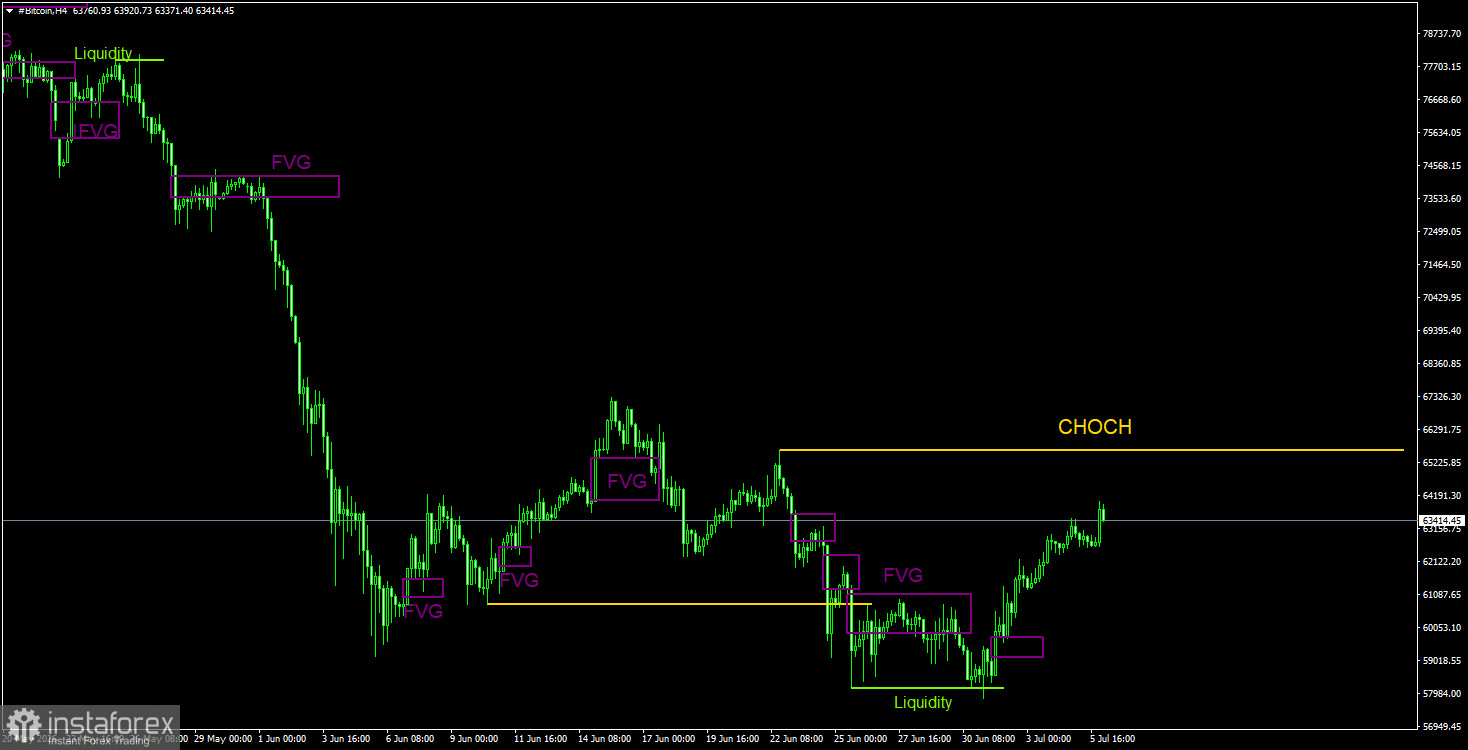
Bitcoin is still forming a full-fledged downtrend. We continue to expect a fall, targeting $57,500 (the 61.8% Fibonacci retracement of the three?year uptrend), although this level has essentially already been reached. But we do not believe the downtrend will end there. The last bearish FVG pattern formed in the $68,000–$70,700 area on the daily timeframe, so this area acts as a POI for short positions in the coming weeks. On the 4?hour timeframe, Bitcoin has started a new leg of correction, but sell trades remain more attractive. There are no relevant patterns on the 4?hour chart at this time.
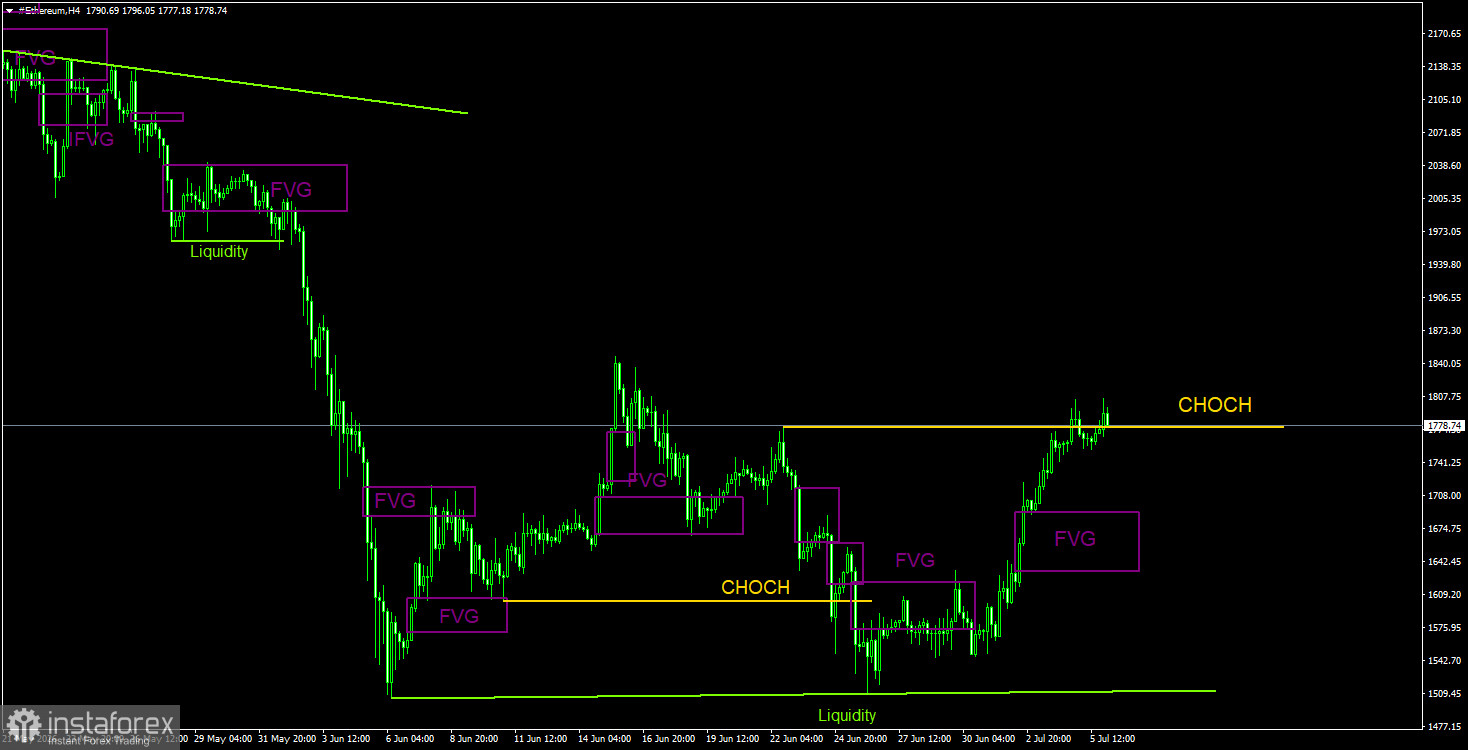
On the daily timeframe, a downtrend continues to form, which began in August last year. The key sell pattern remains the bearish order block on the weekly timeframe. We do not believe the current downtrend is over, as there are no signs of its end for either Bitcoin or Ethereum. Ethereum has resumed its downtrend with targets of $1,391 and $788. However, the market is currently in a pause, trading sideways on the daily timeframe. Thus, in the near term, we would advise watching for deviations above the upper band of the sideways channel to open short positions with targets around $1,680.
CHOCH stands for change of character / break of the trend structure. Liquidity is traders' Stop?Losses that market?makers use to build their positions. FVG is Fair Value Gap (area of price inefficiency). The price often moves quickly through such areas, indicating the absence of one side in the market. Later, the price tends to return and react to these zones. IFVG is Inverted Fair Value Gap. After a return to such a zone, the price does not react but impulsively breaks through and then tests it from the other side.
OB is Order Block. A candle on which a market?maker opened a position in order to harvest liquidity and then form their own position in the opposite direction.

