
อ่านรายละเอียดเพิ่มเติม


 17.06.2026 09:21 AM
Oil has hit a three-month low—Brent is stabilizing around $79 per barrel, while WTI tested $75. Clearly, the market is trading Friday's signing of the memorandum in Geneva as a fait accompli, even though some technical details are still being finalized. Two tankers that were heading to Africa have already turned around in the Indian Ocean and are now headed towards the Middle East—this is the first tangible sign that the shipping industry is beginning to adjust to the new reality.

The speed of the price decline is impressive. At the beginning of April, the spread between the two nearest Brent futures contracts was $9.65. Now, this gap has narrowed to 14 cents. The bullish market structure is formally maintained; however, its intensity has collapsed to nearly zero.
Nevertheless, industry experts caution against rushing to conclusions. We are talking about a gradual recovery rather than an immediate return to normalcy. Companies are reluctant to spend two months redirecting their fleets only to find out that the situation has changed again. Most traders expect that in the initial weeks, ships will be accompanied by U.S. naval forces, and minesweepers will slow the flow—all of which will limit the speed of supply recovery.
At the same time, the structural deficit has not gone away. U.S. oil inventories decreased by 8.3 million barrels last week, including a significant drop at the key hub in Cushing. This marks several consecutive weeks of substantial reductions—and even with the opening of the strait, replenishment will take time. In other words, a drop below $75 in the coming months looks unlikely, even with a successful opening of the strait.
It is worth noting the key importance of today's decline in oil prices for the Federal Reserve meeting. Oil is now below $80, and the average gasoline price in the U.S. has already dropped to $4, down from a peak of over $4.56 in May. If this trend continues, Kevin Warsh will have a strong argument for a more dovish tone at his first press conference this evening—inflationary pressure is beginning to subside on its own, without the central bank's intervention. The only question is how sustainable the Iranian agreement will be—and the market has been grappling with it for several months.
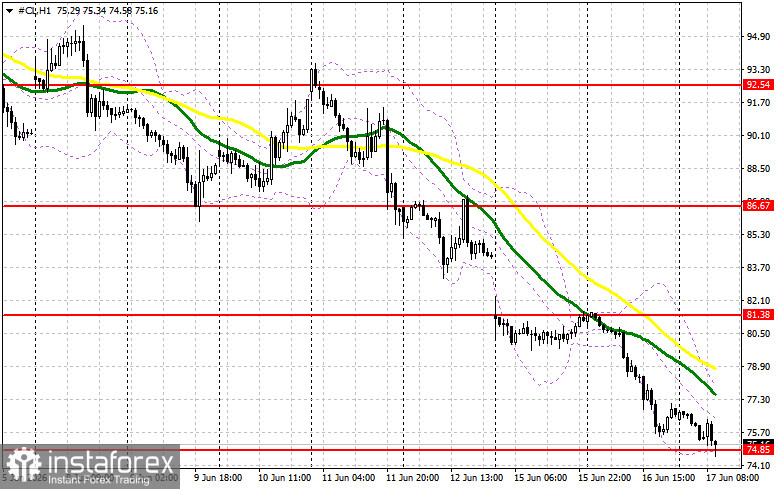
Regarding the current technical picture for oil, buyers need to reclaim the nearest resistance at $81.40. This would allow them to target $86.67, above which it will be quite challenging to break through. The further target would be around $92.54. In the event of a decline in oil prices, bears will aim to take control of $74.85. If they succeed, breaking below this range will deal a serious blow to bullish positions and could push oil down to a low of $67.77, with the potential to reach $59.90.


