
আরও দেখুন


 08.06.2026 06:13 AM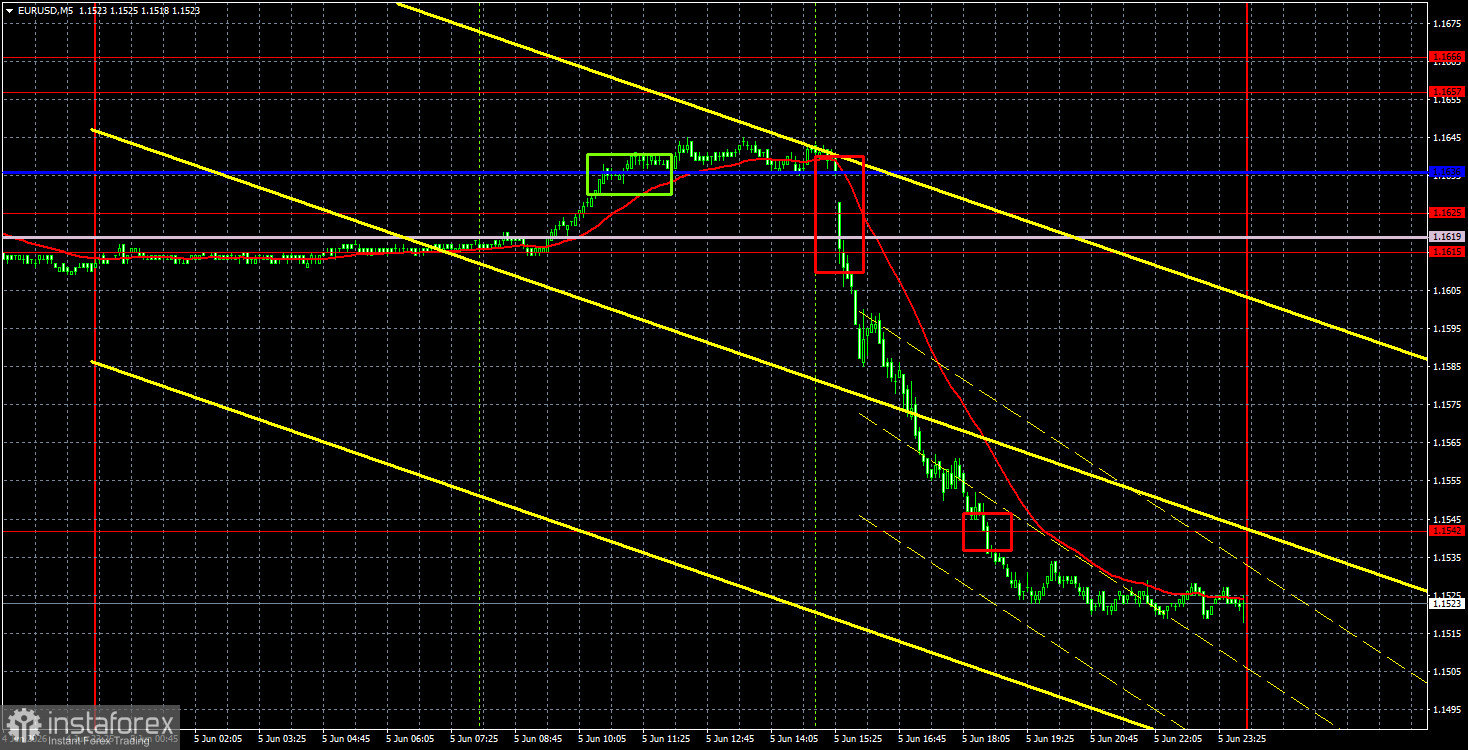
The EUR/USD currency pair experienced a powerful decline on Friday, which was triggered solely by one event - the Non-Farm Payrolls report. Much has been said about this report, so I won't repeat it. It's worth noting that, in addition to the Non-Farms, wage and unemployment data were also published. However, the first report did not attract any interest, and the second matched projections. Therefore, the market focused only on the Non-Farms, and only because the values of this report were very resonant. Thus, the three-week flat is over, and we need to figure out whether further declines in the pair are expected. Given that geopolitics remains tense and Iran and the US cannot reach an agreement, further strengthening of the dollar seems likely. Considering the possible Federal Reserve tightening by the end of the year, dollar strengthening seems logical. Yet, we would like to remind you that these are only two factors supporting the U.S. currency. There are numerous other factors acting against the dollar.
Technical analysis indicates a resumption of the downward trend, but whether it will continue remains a big question. If Tehran and Washington somehow sign a deal, demand for the U.S. currency will begin to fall. If inflation in the U.S. starts to slow down, the Fed will not face the dilemma of whether to tighten monetary policy.
On the 5-minute timeframe on Friday, three trading signals were generated. The first buy signal near the critical line was meaningless to pursue, as only 20 pips above was positioned level 1.1657. The second sell signal, along with the Non-Farm data, allowed for short positions. The third sell signal formed during the movement. Thus, traders could have opened one short position and gained a good profit.
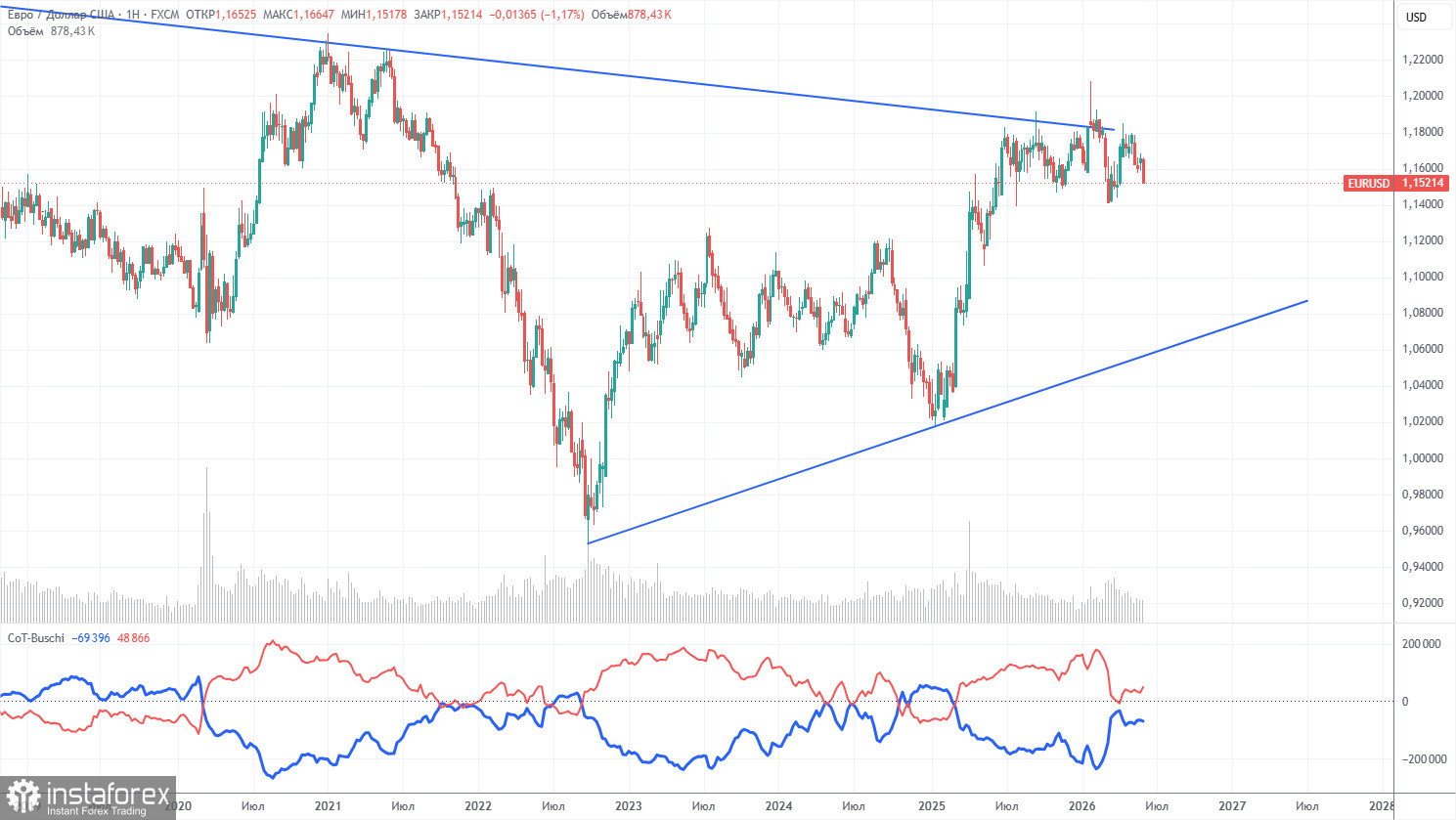
The latest COT report is dated June 2. On the weekly timeframe illustration, it is evident that the net position of non-commercial traders remains "bullish," but has significantly decreased due to geopolitical events. Traders have been shedding the European currency in favor of the U.S. dollar in recent months. Donald Trump's policy has not changed, but for some time, the dollar has been the "reserve currency." However, this process may now be coming to an end.
We still do not see any fundamental factors to strengthen the European currency, but there are plenty of factors for the American dollar to decline. The war in the Middle East made the dollar temporarily super-attractive, but as this factor reaches its "expiration date," everything will return to normal. And it may already have expired. In the long term, the euro could fall to the level of $1.08 (the trend line), but the upward trend will still remain relevant. Over the past few months, the pair has not gotten too close to this line.
The positioning of the indicator's red and blue lines indicates parity between bulls and bears. Over the last reporting week, the number of longs among the "Non-commercial" group increased by 12,400, while the number of shorts decreased by 7,000. Consequently, the net position rose by 21,400 contracts over the week.
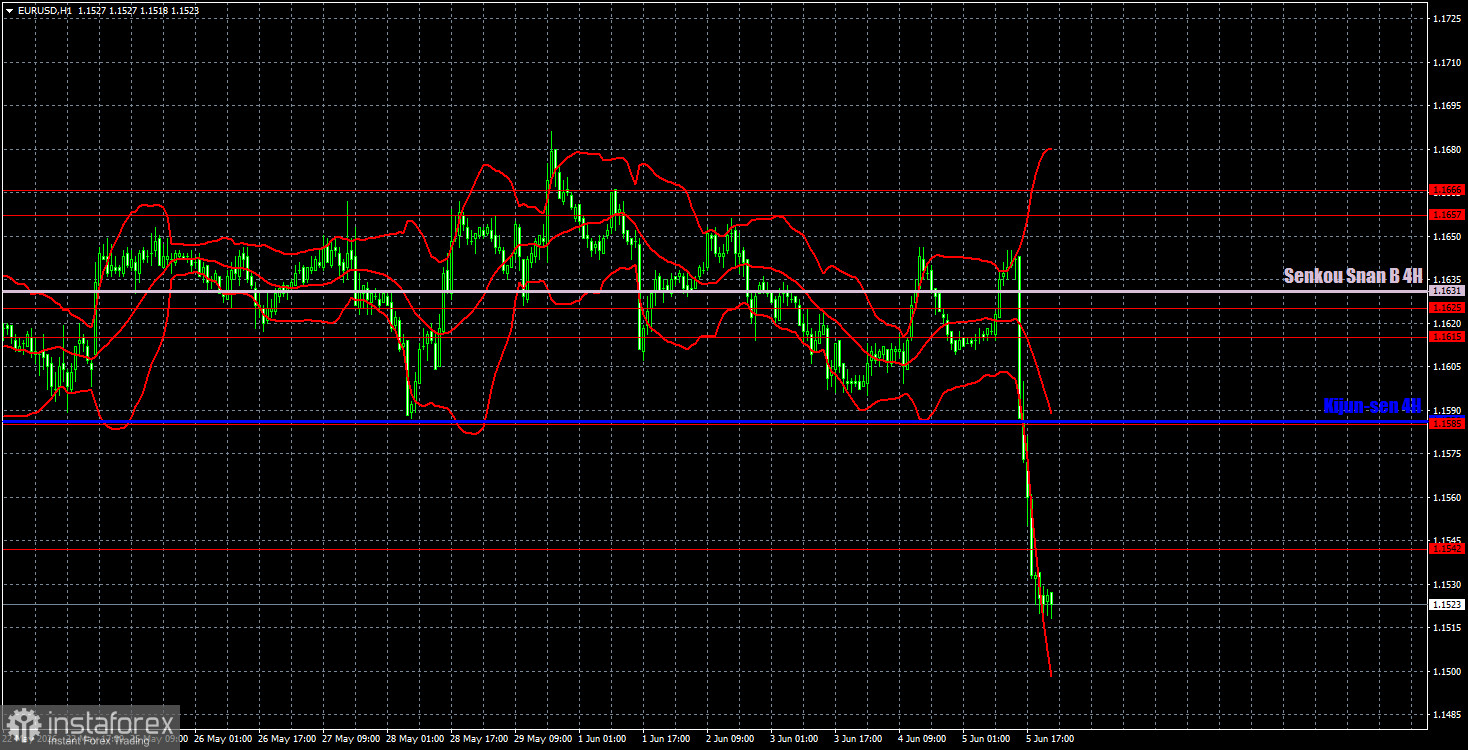
On the hourly timeframe, the EUR/USD pair has resumed its downward trend. The situation in the Middle East remains tense; it is not getting worse, and Washington and Tehran may only dream of signing a preliminary agreement. If there are no new signs of renewed war in the Middle East and a memorandum is indeed signed, the dollar will begin to lose ground. But for now, we see neither a deal nor a revival of war.
On June 8, we highlight the following trading levels — 1.1362, 1.1426, 1.1542, 1.1585, 1.1615-1.1625, 1.1657-1.1666, 1.1750-1.1760, 1.1786, 1.1830-1.1837, 1.1907-1.1922, as well as the Senkou Span B line (1.1631) and Kijun-sen (1.1586). The Ichimoku indicator lines may move during the day, which should be taken into account when determining trading signals. Don't forget to set a Stop Loss order at breakeven if the price has moved in the right direction by 15 pips. This will protect against potential losses if the signal proves false.
On Monday, there are no important events or reports scheduled in the Eurozone and the US. Hence, traders will have nothing to react to, and Monday may prove boring and corrective.
Today, traders can consider short positions targeting level 1.1444 if the price remains below level 1.1542. Long positions can be opened in case of consolidation above 1.1542, with a target of 1.1585.


