
Vea también


 07.07.2026 06:02 AM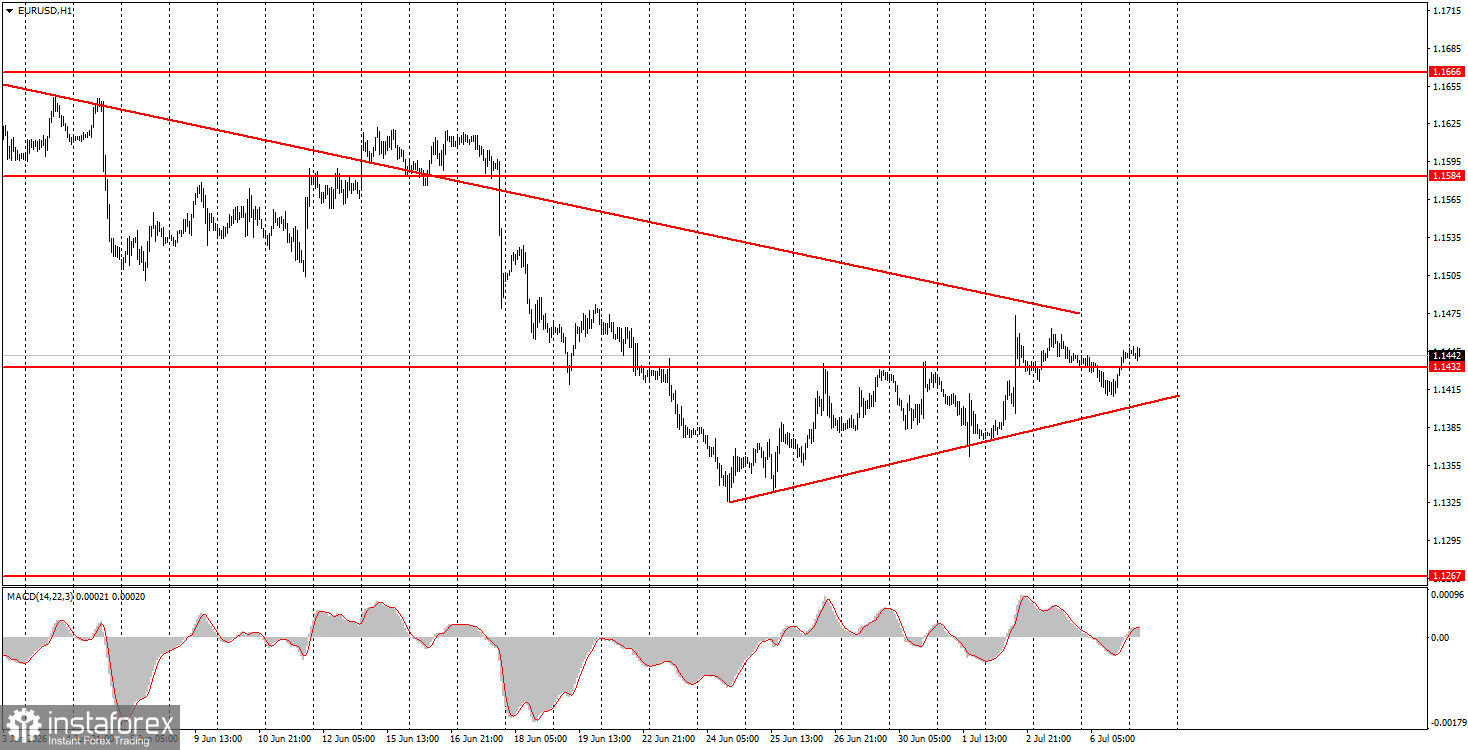
Several macroeconomic publications are scheduled for Tuesday, but none are particularly significant. In Germany, the May industrial production report will be released, while in the U.S., the weekly ADP private-sector employment change report will be released. It's worth noting that the ADP report is now published weekly; however, the market rarely reacts to its monthly release, preferring to draw conclusions from the Nonfarm Payrolls report. The Nonfarm data released last week clearly indicated that the U.S. labor market is contracting again. A contraction in the U.S. labor market could provide the Federal Reserve with grounds to refrain from raising the key rate in the near term.
There is absolutely nothing to highlight among the fundamental events for Tuesday, as there are no scheduled speeches from representatives of the European Central Bank, the Bank of England, or the Fed. However, this is not a problem, as the outlook for all three central banks is clear and understandable. The ECB will likely be looking for further reduction in inflation and will not rush to tighten policy. The BoE also does not intend to raise the key rate in the near term. If the Fed does begin tightening, it will not happen before the fall and only if inflation does not slow down on its own.
The geopolitical backdrop remains consistently "conditionally positive." Iran and the U.S. have signed an agreement remotely, but too many important issues remain unresolved. In particular, there is the "nuclear issue," the war between Lebanon and Israel, and the status of the Strait of Hormuz. Theoretically, the market may fear the resumption of a full-scale war; however, this is clearly not enough to sustain dollar demand. After all, Tehran and Washington are still on tracks leading to peace, and negotiations are ongoing, although no one expects them to be quick and easy.
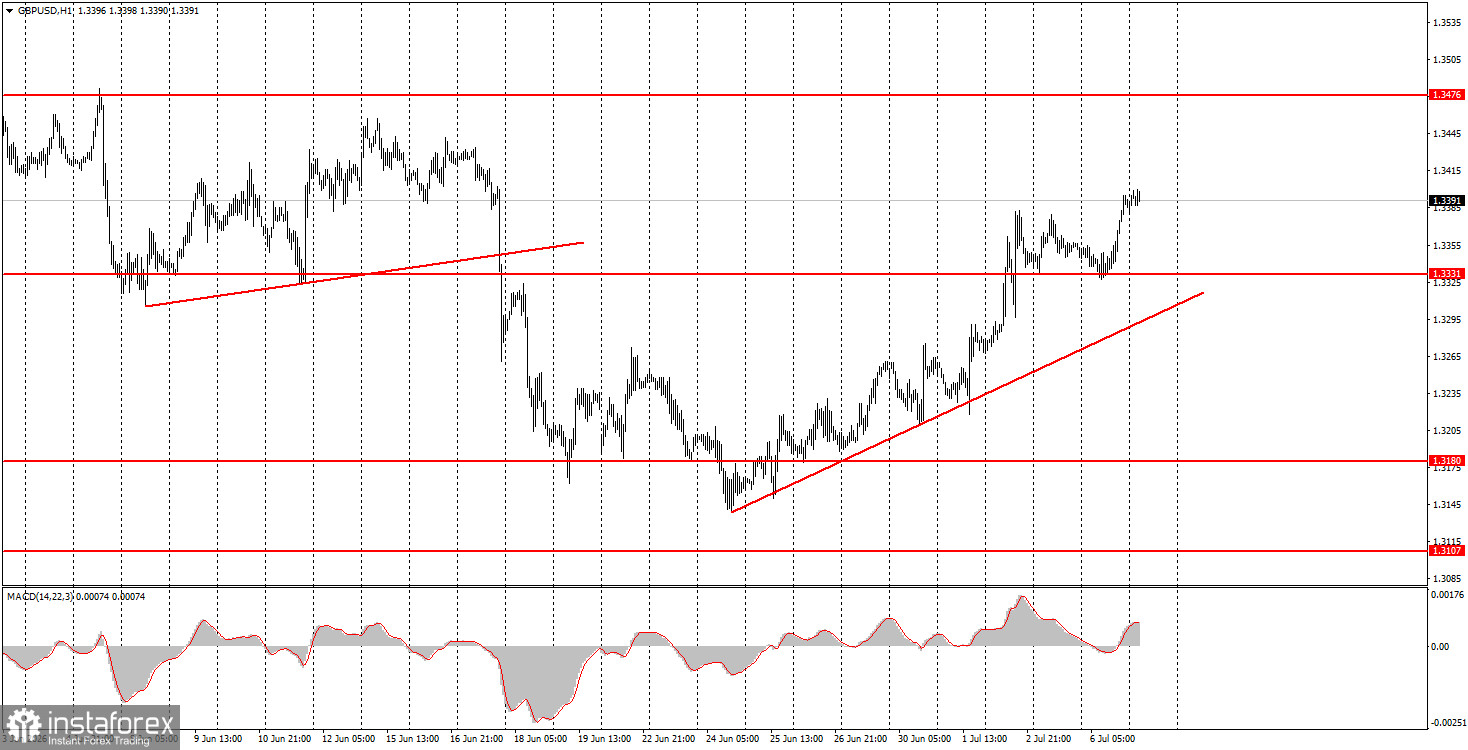
During the second trading day of the week, both currency pairs may trade very sluggishly, as there are no significant events today—0.0. Both the euro and the pound may continue their recovery. The euro can be traded from the area of 1.1420-1.1432, while the British pound can be traded from the area of 1.3380-1.3386. We would not expect strong movements and high volatility today.
Price levels (areas) of support and resistance are targets when opening long or short positions or sources of signals.
Red lines indicate channels or trend lines that display the current trend and indicate the preferred direction for trading.
The MACD indicator (14,22,3) – histogram and signal line – is a supplementary indicator that can also be used as a source of signals.
Important speeches and reports (contained in the news calendar) can significantly impact the movement of the currency pair. Therefore, during their release, trading should be conducted with maximum caution, or one should exit the market to avoid sharp reversals against preceding movements.
Beginners trading in the forex market should remember that not every trade can be profitable. Developing a clear strategy and practicing money management are key to long-term success in trading.


