
یہ بھی دیکھیں


 06.07.2026 01:08 PM
Bitcoin rose for five consecutive days and reached a two-week high before stepping back. The rally was driven not by the cryptocurrency's own strengths but by weakness in the labor market — US payrolls grew more slowly than expected. Short-term bond yields fell on hopes that the Federal Reserve would not need to raise interest rates in the near term. Lower borrowing costs commonly increase the appeal of volatile assets, and Bitcoin was no exception.
Flows into Bitcoin-focused ETFs
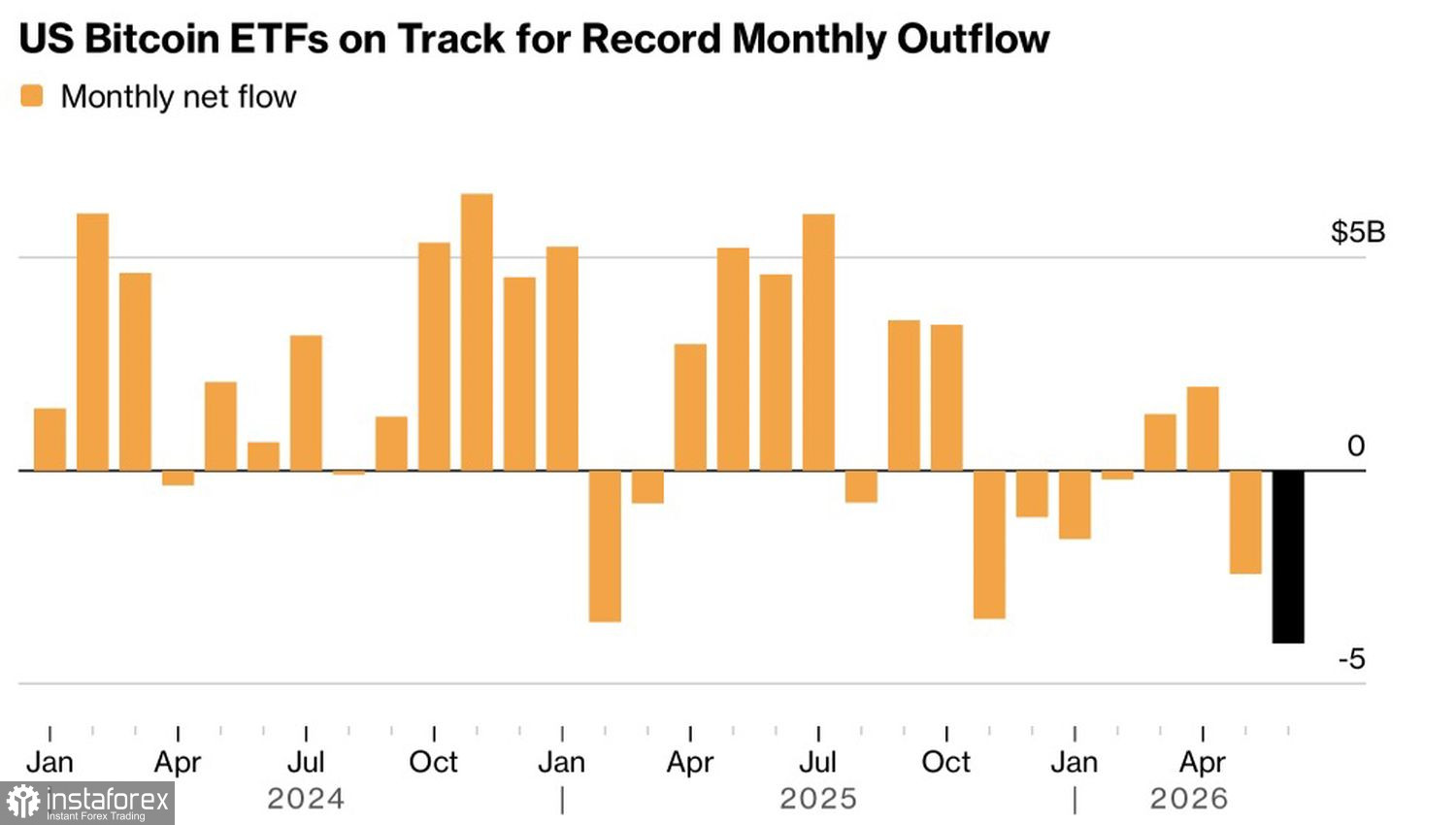
Before this rebound, BTC/USD had plunged to a 21-month low. June became the worst month for the crypto market since 2022. According to Bloomberg, US-listed spot Bitcoin ETFs recorded their worst month of outflows since the January 2024 launches — investors withdrew more than $4.1 billion from 13 funds. The lion's share, about $3 billion, came from the industry's largest fund, BlackRock's IBIT.
However, record capital outflows are not Bitcoin's only headache. JP Morgan warns that a change in Michael Saylor's strategy has shaken market dynamics. The Strategy company, previously a model of relentless accumulation of tokens, has moved to selective sales of Bitcoin to finance dividends on preferred shares. In doing so, one of the largest buyers of the cryptocurrency risks becoming a seller, adding the prospect of two-way flows to the market.
Dynamics of Bitcoin's downtrend
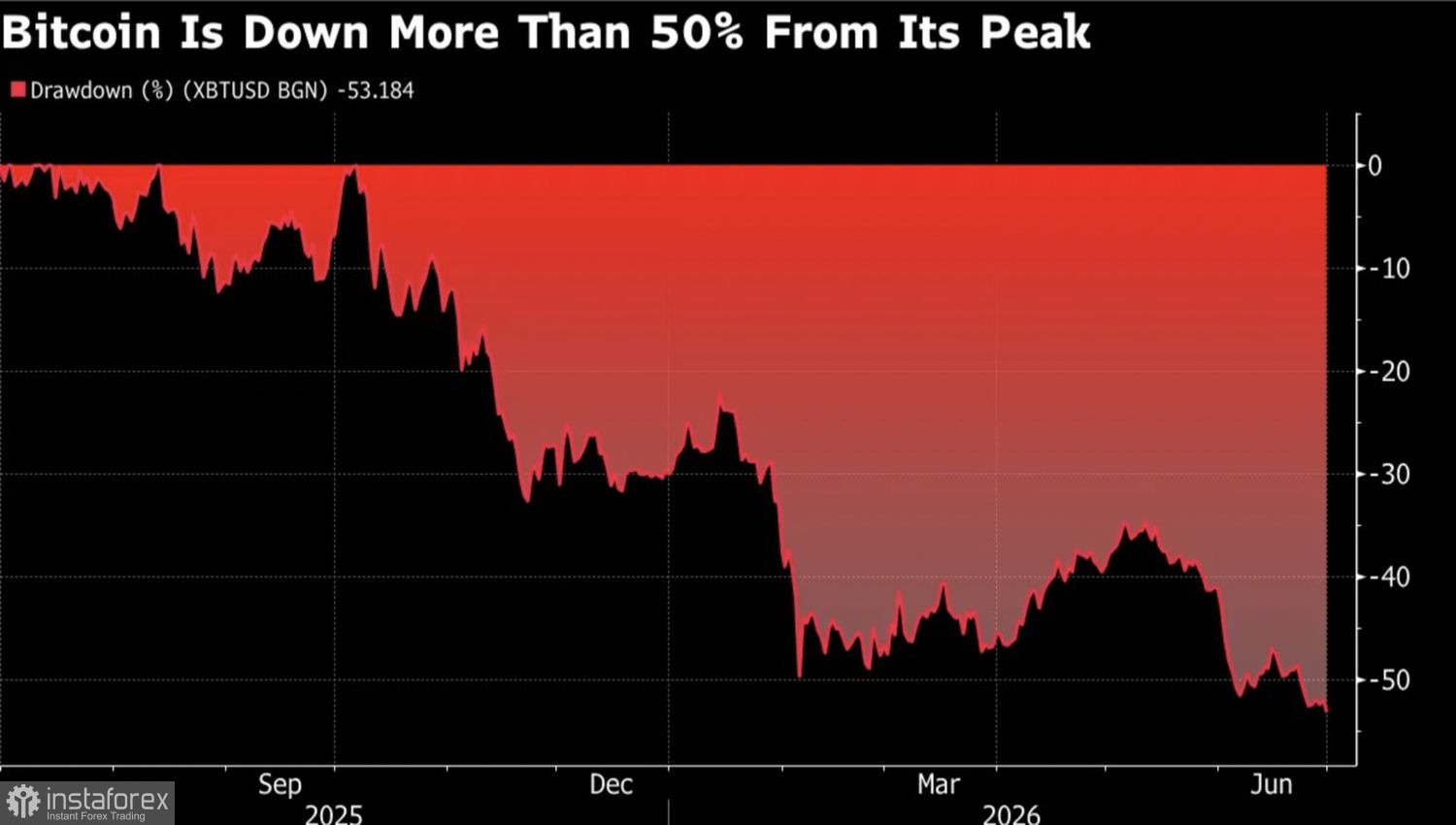
JP Morgan estimates that this year, Strategy purchased $8.2 billion worth of Bitcoin — about 70% of all net inflows into digital assets for the year — and the company's holdings represent 4.2% of BTC's total supply. For now, reserves are sufficient to cover dividends for two to three years ahead, but the market needs reassurance that those holdings will not have to be monetized.
Meanwhile, the market structure is changing before our eyes. Retail investors, who previously absorbed sharp sell-offs, have largely disappeared. Bitcoin is increasingly dependent on institutional capital, and the market is searching for a new marginal buyer.
Thus, weak US labor data gave Bitcoin a temporary breather, but structural problems — ETF outflows and uncertainty around Strategy — remain. Will a new marginal buyer for BTC/USD emerge, or will this rebound remain only an episode against a broader downtrend?
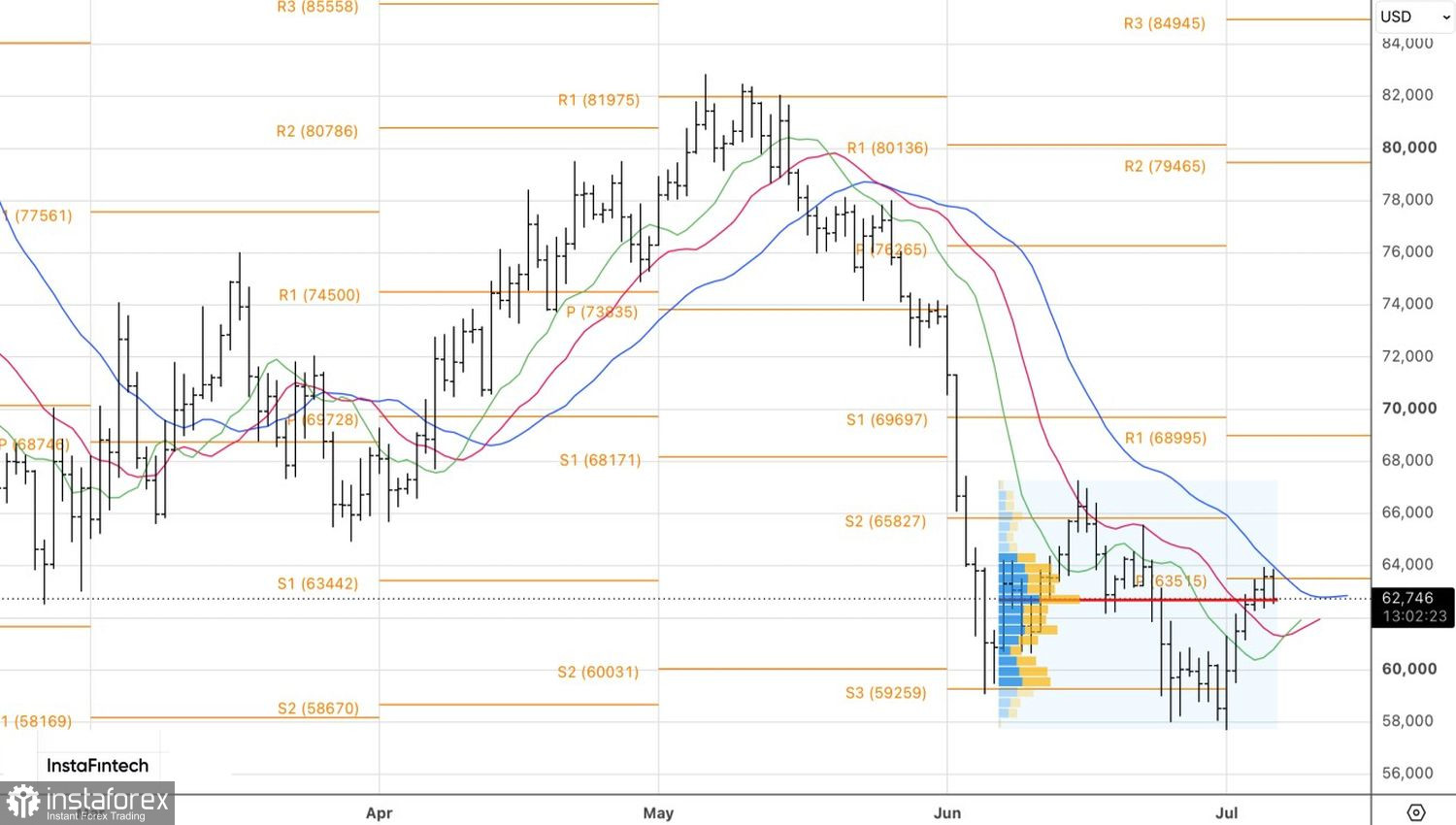
Technically, on the daily chart, BTC/USD is forming a reversal pattern called Anti-Turtles. To trigger it, prices need to hold above pivot levels at $63,500 and $65,800. A successful test of these resistances would be a reason to open long positions. Conversely, if Bitcoin's bulls fail to hold fair value at $62,700, a return to selling should be considered.


